
GHK-CuGHK-Cu
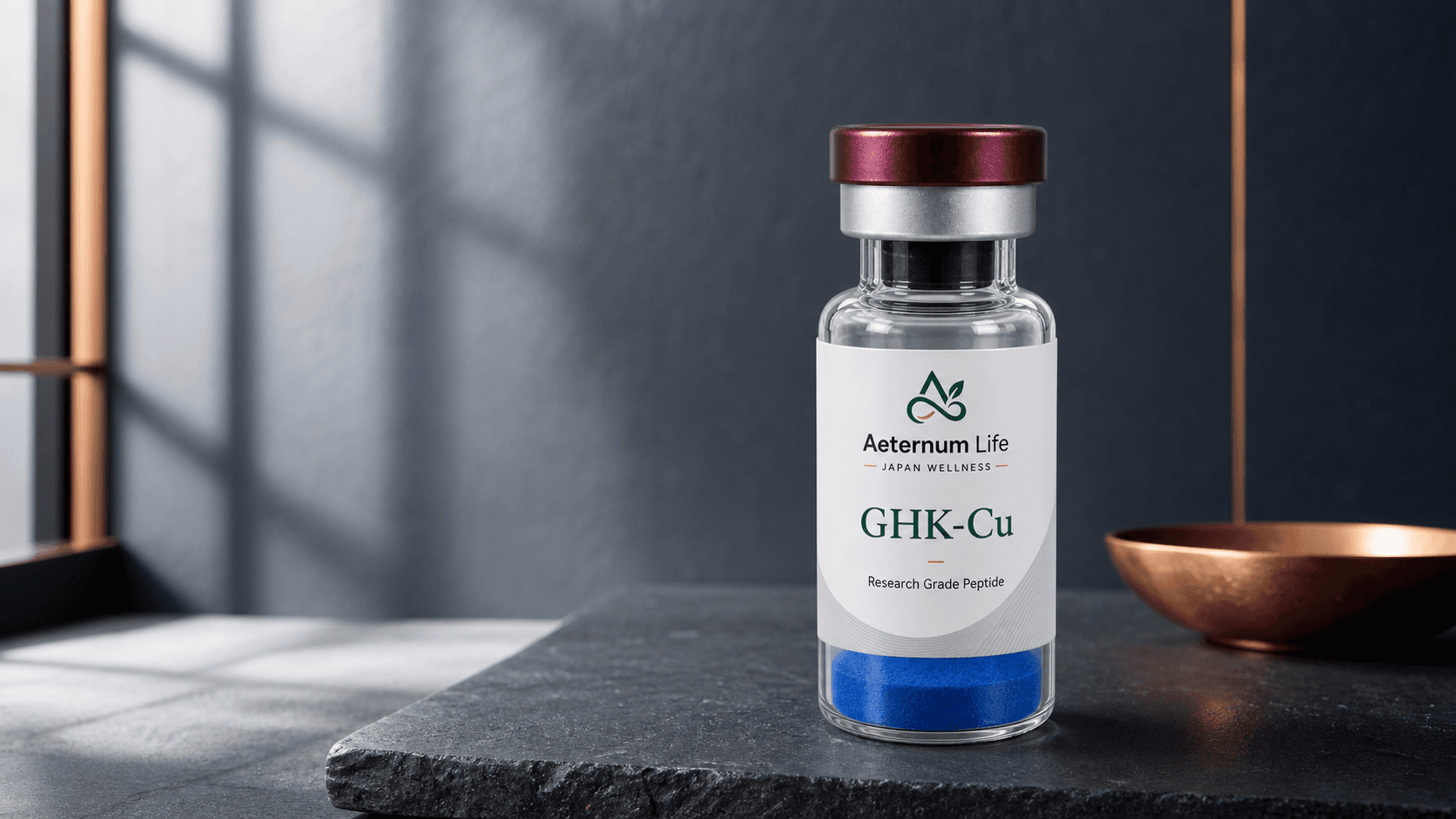
GHK-Cu laboratory research material
Review identity, format, storage, and currently published batch records.
GHK-Cu (Copper Tripeptide-1) supplied strictly for laboratory research. Not for human or veterinary use. Published batch documentation is shown when a matching record is available.
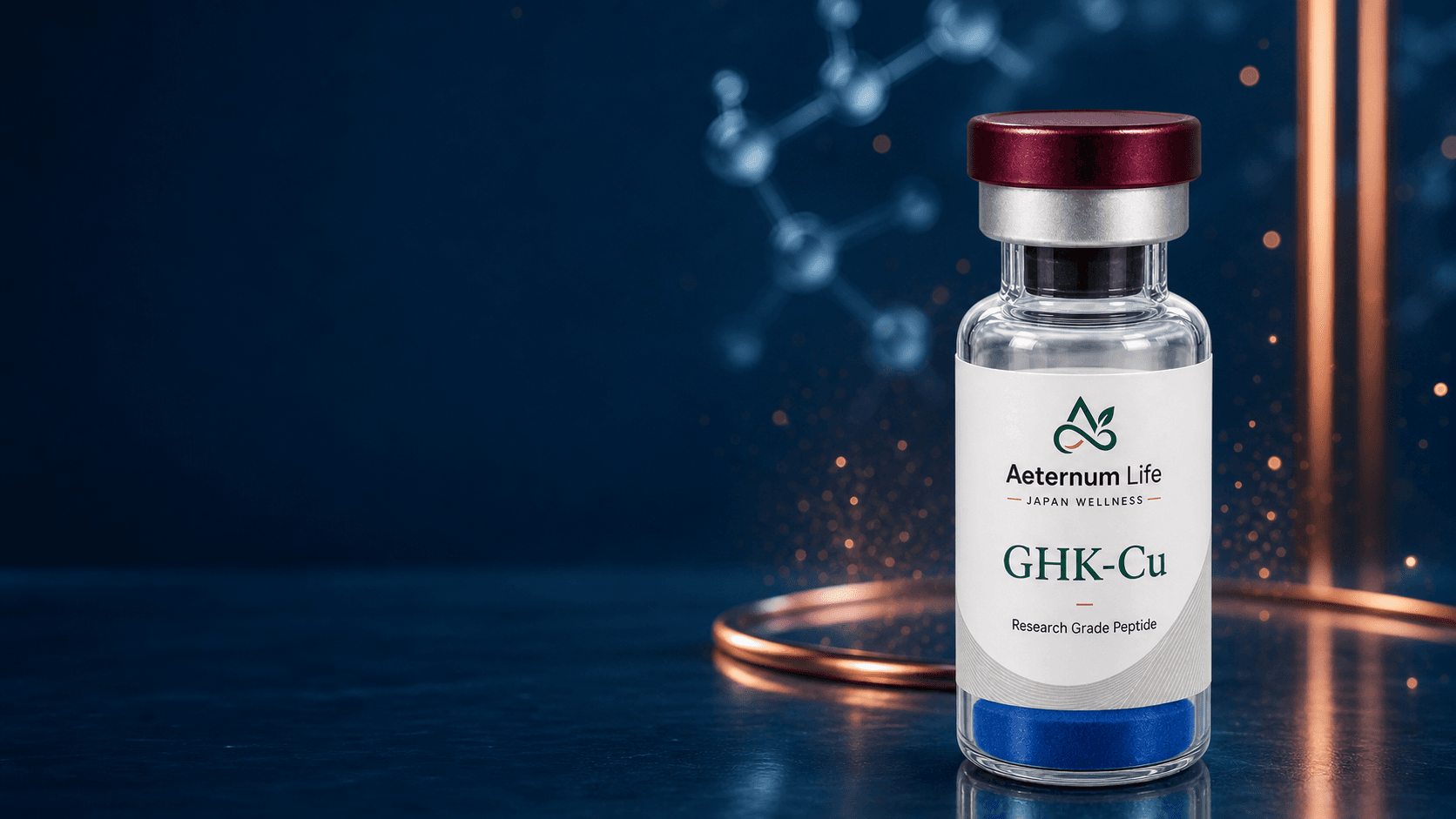
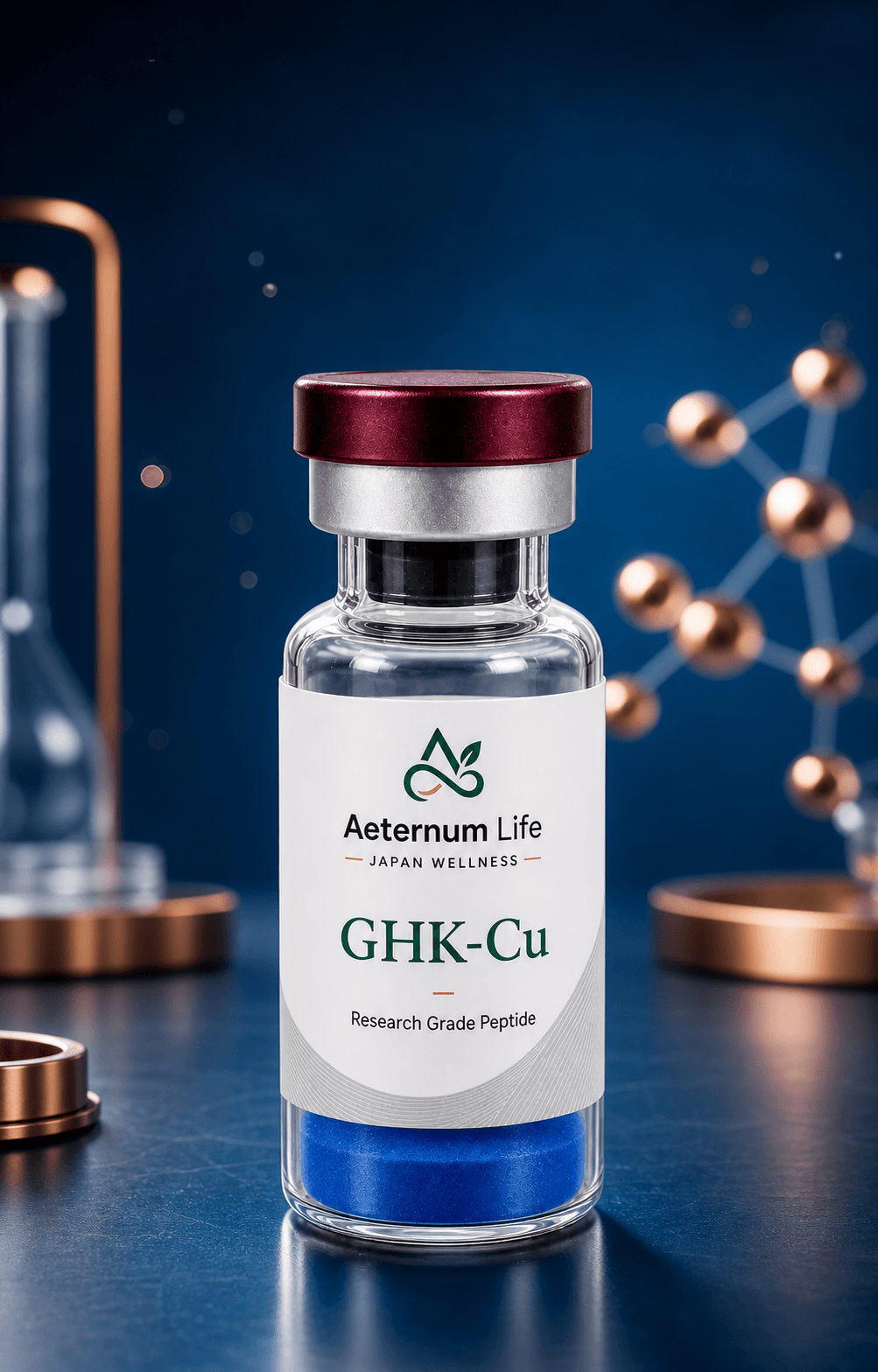
Why choose Aeternum Life GHK-Cu
Supplied strictly for laboratory research, not for human or veterinary use.
The product page identifies the material as GHK-Cu (Copper Tripeptide-1).
Available vial size, format, and storage information are stated on the product page.
Published batch documentation is linked when a matching record exists.
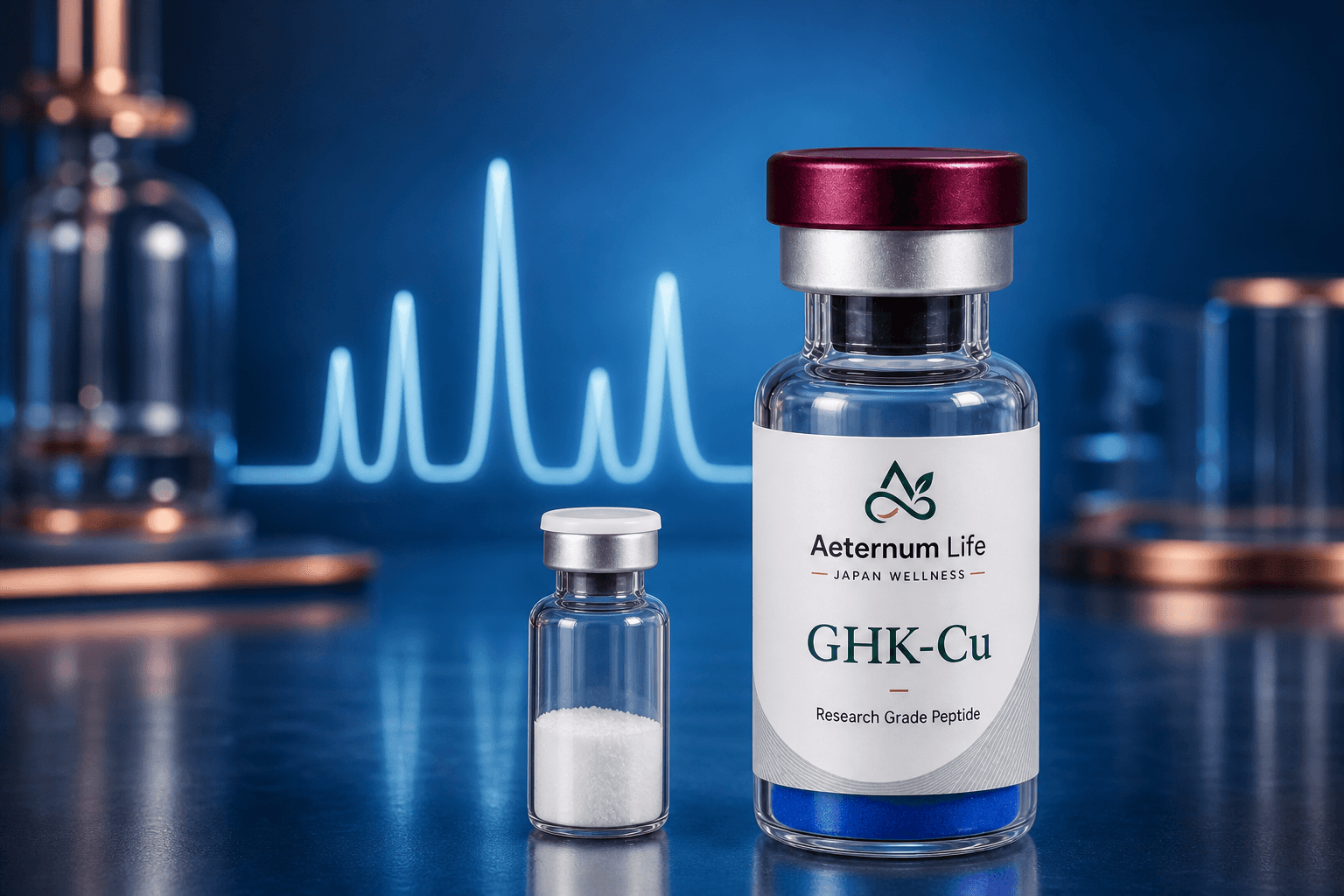
Quality & Testing
- Check the batch number on the published record
- Review the purity field when the report states one
- Review the test date shown on the report
- Laboratory and verification details appear only when published
A purity number is not enough on its own. We confirm what the material is, measure its purity and match the report to the lot number on your vial.
50 mg or 100 mg?
Both vials contain the same material and meet the same quality standard. The only difference is how much is in the vial.
Stock and delivery questions — usually replies within a few hours
- ✓ Available payment methods confirmed in cart
- ✓ Published batch record when available
Sizes describe vial contents only. No administration or dosing guidance is provided for either size.

What is GHK-Cu?
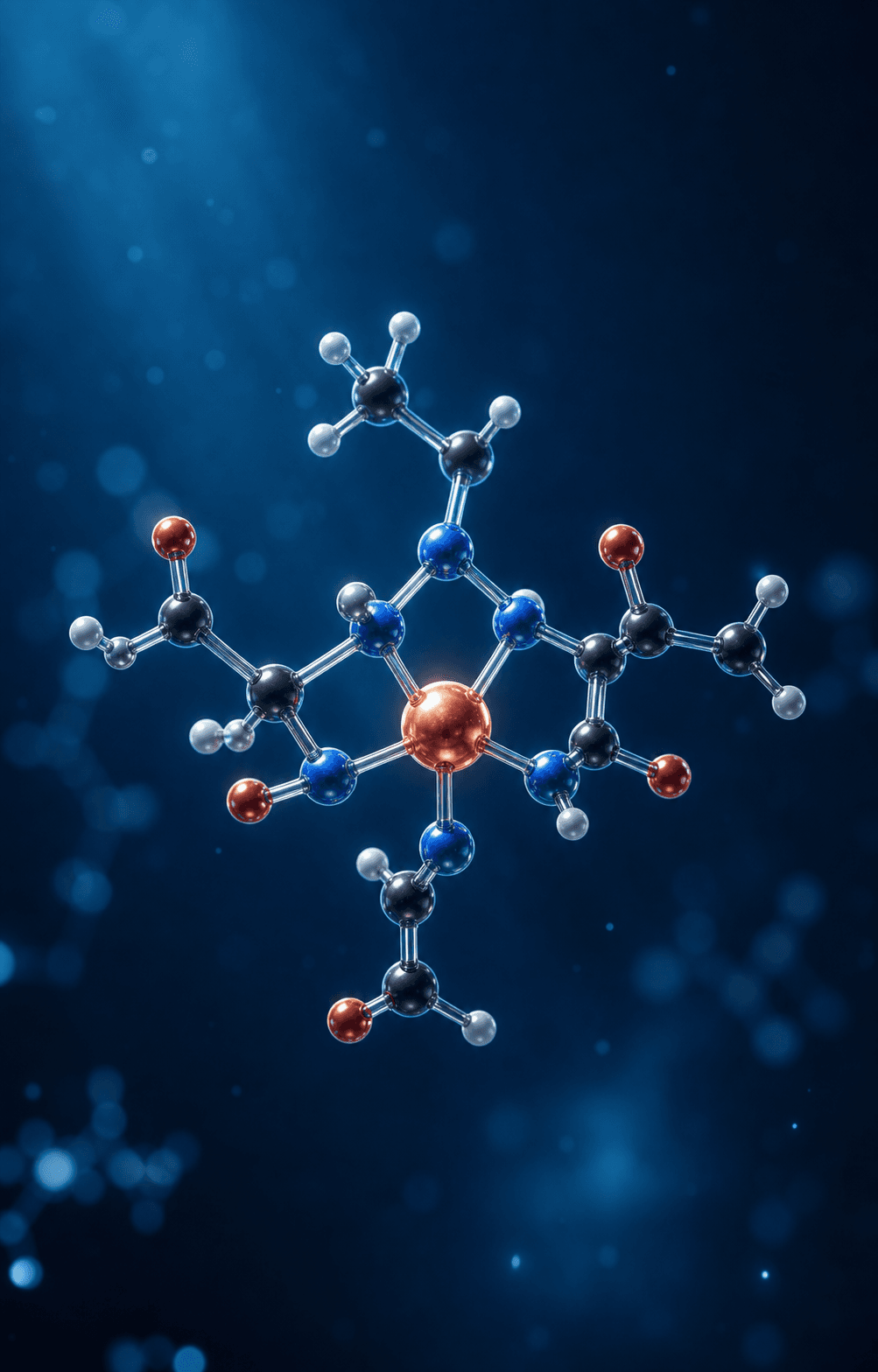
GHK-Cu is a small copper-binding peptide that naturally occurs in the body. It is made from three amino acids joined to a copper ion, which gives the powder its blue color.
First identified in human plasma in 1973, GHK-Cu has since been studied mainly for skin structure, collagen, repair, antioxidant activity and changes linked to aging.
The copper is not added just for color. It is part of the GHK-Cu molecule researchers study.
Aeternum Life supplies GHK-Cu as a laboratory research material. Product specifications and any matching published batch record should be reviewed before ordering.
Why the copper matters
GHK and GHK-Cu are not the same. Once GHK binds to copper, it becomes the blue form used in most published research.
The three-amino-acid peptide wraps around a copper ion and helps keep it stable.
GHK holds copper firmly, but can still pass it to other natural copper carriers.
Research on collagen, repair and antioxidant activity usually looks at the copper-bound form, not GHK alone.
This explains the molecule in plain language. It does not claim a proven effect in people.
What researchers are looking at

Most GHK-Cu research is still early-stage. These are the main areas scientists are exploring, not guaranteed outcomes.
Early studies look at skin structure, the skin barrier and how skin cells respond.
Lab research explores its possible role in the proteins that help skin stay firm and flexible.
Researchers study how GHK-Cu may support the natural rebuilding process after stress or damage.
Studies look at how its copper-binding action may help cells deal with oxidative stress.
Lab studies track which cell signals appear to change when GHK-Cu is present.
Researchers are interested in why natural GHK levels appear to fall as people get older.
- Pickart L, Margolina A. Regenerative and protective actions of the GHK-Cu peptide. Int J Mol Sci, 2018.
- Pickart L. The human tri-peptide GHK and tissue remodeling. J Biomater Sci Polym Ed, 2008.
- Pickart L, Vasquez-Soltero JM, Margolina A. GHK peptide as a natural modulator of multiple cellular pathways in skin regeneration. BioMed Research International, 2015. (PubMed)
- Maquart FX, et al. Stimulation of collagen synthesis in fibroblast cultures by the tripeptide-copper complex glycyl-L-histidyl-L-lysine-Cu²⁺. FEBS Letters, 1988. (PubMed)
- Pickart L, Thaler MM. Tripeptide in human serum which prolongs survival of normal liver cells. Nature New Biology, 1973. (PubMed)
For research purposes only. GHK-Cu is not a drug or dietary supplement and is not intended to diagnose, treat, cure or prevent any disease.
Handling & Storage
Simple storage guidance for GHK-Cu research material.
Store the sealed vial in a cold place and protect it from light.
Protect the freeze-dried powder from moisture.
Blue can look lighter or darker for several reasons. Use the COA to check purity.
Handle it as you would any other laboratory research material.
The COA matches the lot number on your vial and lets you trace the exact batch.
Supplied strictly for laboratory and research use. Not for human or veterinary consumption; no administration or dosing guidance is provided.
Specifications
- Name
- GHK-Cu (Copper Tripeptide-1)
- Sequence
- Gly-His-Lys (GHK) + Cu²⁺
- CAS
- 89030-95-5
- Appearance
- Blue lyophilized powder
- Sizes
- 50 mg / 100 mg
- Purity
- ≥ 99% (see COA)
- Storage
- Store cold, protect from light
- Origin
- Made in Japan
For research use. Not intended to diagnose, treat, cure or prevent any disease.
Join the Aeternum Life community
Receive catalog, stock, and published-document updates. No personal-use, dosing, injection, or reconstitution guidance is provided.
Join our TelegramFrequently asked questions
What exactly is GHK-Cu?
It is a small peptide that naturally occurs in the body. When it joins to copper, it forms the blue material known as GHK-Cu.
Is GHK-Cu for human use?
No. Aeternum Life supplies GHK-Cu strictly as a research-grade material for laboratory research. It is not sold for human or veterinary consumption.
Why is the powder blue?
The blue color comes from the copper joined to the peptide.
How is this different from a copper-peptide skincare product?
Skincare is a finished formula with many ingredients. This is the GHK-Cu raw material itself, measured in milligrams and tested by batch.
Should I choose 50 mg or 100 mg?
Both are the same material to the same specification. 50 mg suits a first vial; 100 mg is better value per milligram when work runs across repeats.
How should I store it?
Keep the sealed vial cold, dry and away from light.
How long does it keep?
Follow the shelf-life information on the batch documents and keep the vial cold, dry and protected from light.
Do you provide dosing or reconstitution instructions?
No dosing guidance is provided, in any format. General laboratory handling and storage guidance is on this page; anything beyond that is outside what we supply.
Where is it made and shipped from?
Made in Japan and dispatched from our Japan facility, with discreet, tracked worldwide shipping.
Do you supply larger quantities?
Yes — message us on WhatsApp for bulk quotes, current stock and lead times. A real person usually replies within a few hours.
About Aeternum Life
Aeternum Life Limited is the legal seller disclosed for this website. The current catalog consists of laboratory research materials and research accessories.
Keep up with the GHK-Cu research
New reviews, data and study summaries — sent when there is something worth reading, not on a schedule.
No spam. Unsubscribe anytime.
Questions before you order?
Message us on WhatsApp for pricing, bulk quotes, stock and published batch-document questions — a real person, usually within a few hours.
Message us on WhatsAppExplore the full Aeternum Life range
Browse the current research catalog and review each item’s intended-use status, specifications, and available batch records.
Stock and delivery questions — usually replies within a few hours
- ✓ Available payment methods confirmed in cart
- ✓ Published batch record when available