The online assessment helps organize your goals, preferences, medication use, and health background alongside suitable product directions. If you are pregnant, taking prescription medication, under medical care, or managing a specific health condition, you can request a professional review before ordering. Our products are positioned as nutritional and wellness support, not for diagnosing, treating, or preventing any disease.
Gut/repair direction: KPV with BPC-157 entry-level repair stack.
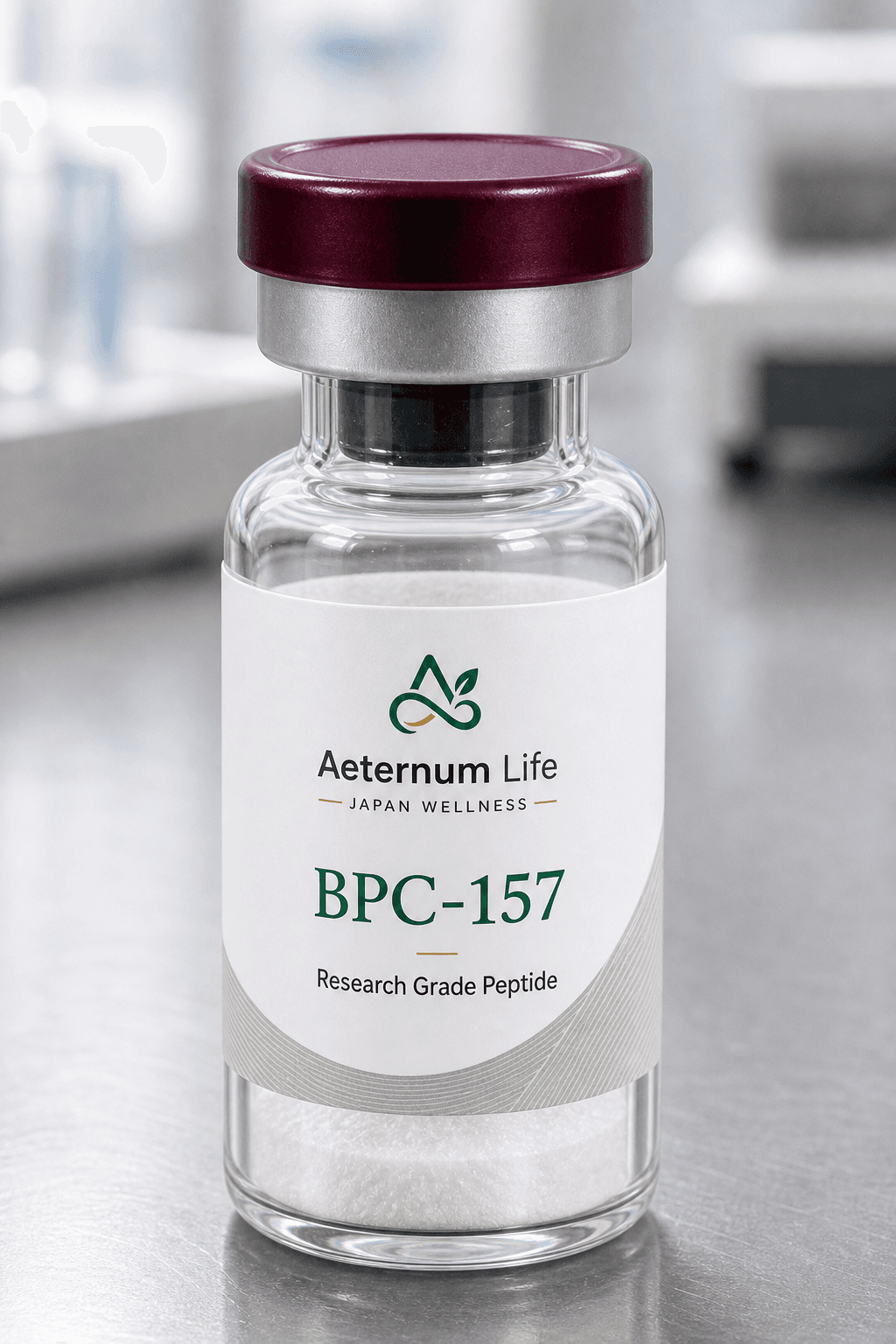
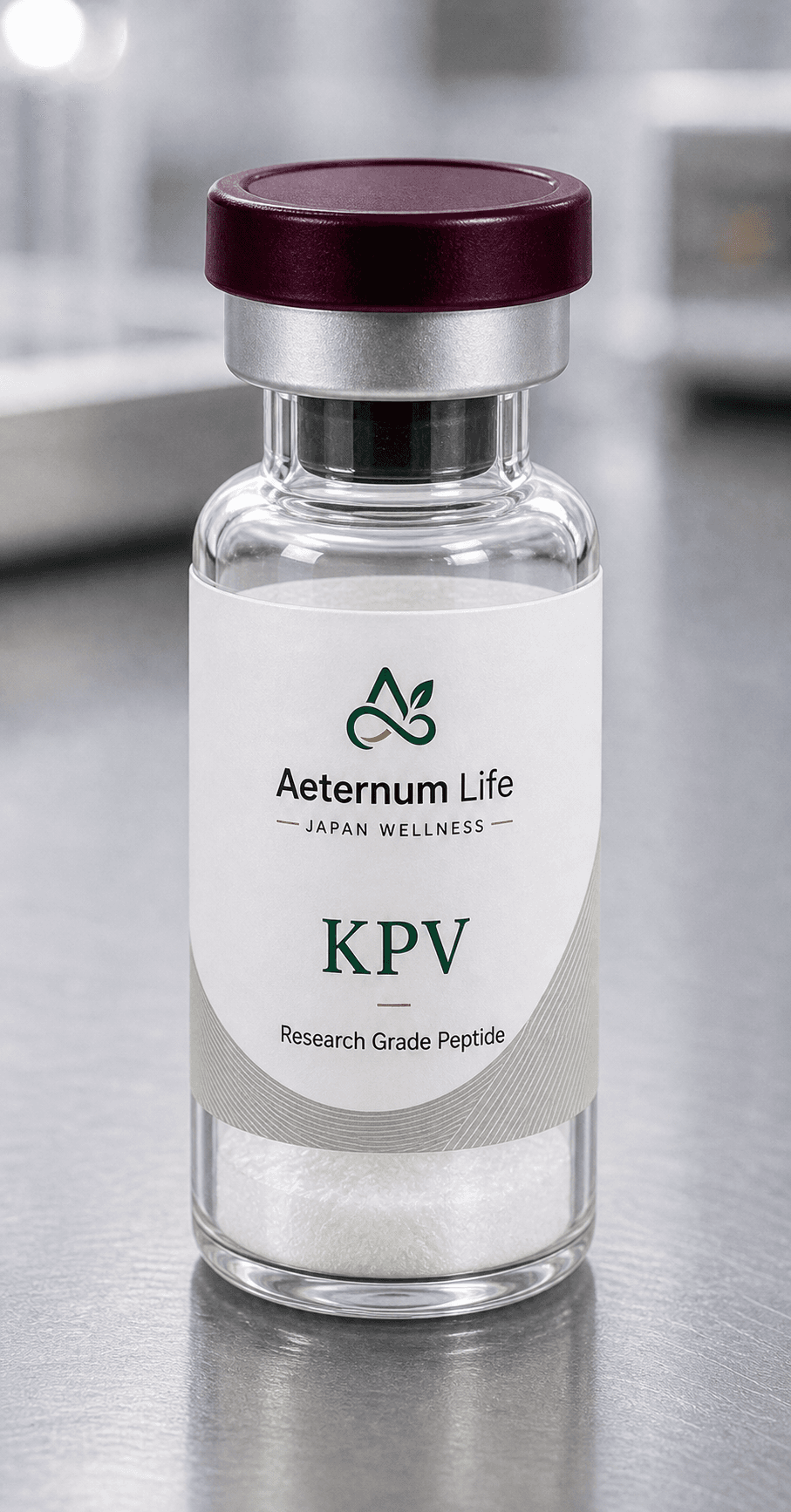
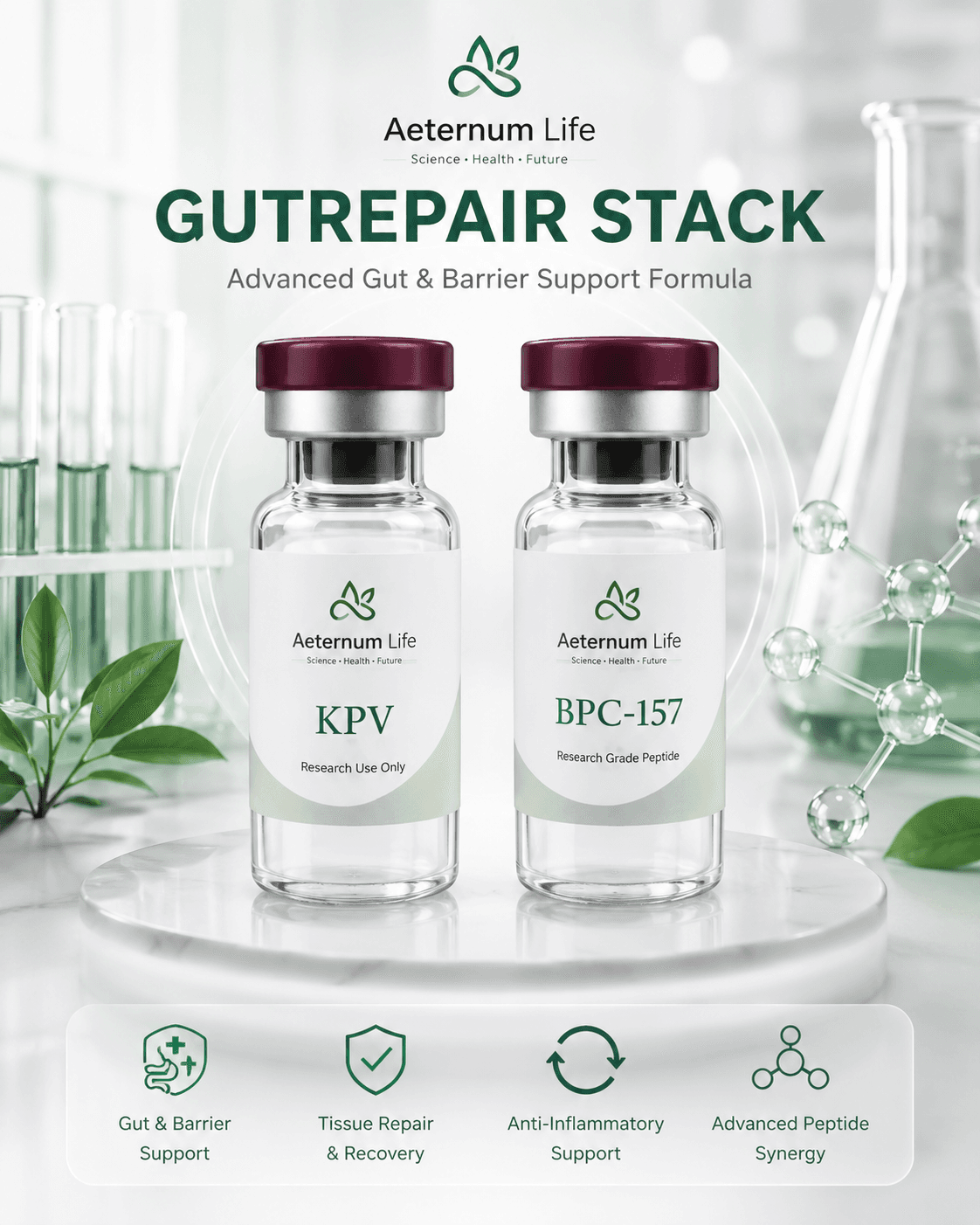
BPC-157 × KPV Gut Barrier Research Stack
[Stack Positioning]
This stack focuses on gut barrier status from two angles:
· BPC-157 emphasizes tissue repair: studies damaged mucosa, connective tissue, and structural recovery.
· KPV emphasizes inflammation modulation: studies persistent inflammatory signaling and its impact on the gut environment.
Simply put, BPC-157 investigates "how damaged areas can be better repaired," while KPV investigates "whether inflammatory signals affecting repair can be controlled."
Combined, they aim to address both structural repair and inflammatory modulation of the gut barrier, rather than focusing on only one aspect.
[BPC-157 · Tissue Repair Direction]
BPC-157 is a material used in tissue repair research, with studies primarily focusing on gastrointestinal mucosa, soft tissues, and connective tissues.
Key research areas include:
· Studying the repair process after gastrointestinal mucosal damage
· Investigating blood supply and tissue recovery in damaged areas
· Focusing on collagen formation and connective tissue status
· Studying cell migration to damaged areas and participation in repair
· Observing changes after gastrointestinal, tendon, and soft tissue injuries
In short, BPC-157 primarily studies how tissues regrow, reconnect, and restore integrity after injury.
Current data mainly come from cell and animal studies and do not directly represent confirmed human effects.
Positioning: Repair end / Tissue structure layer.
[KPV · Inflammation Modulation Direction]
KPV is a material used in inflammatory signaling research, with studies focusing on the impact of excessive or prolonged inflammatory responses on the gut environment.
Key research areas include:
· Studying changes in gut inflammatory signals
· Investigating the effects of persistent stimulation on gut mucosal status
· Focusing on modulation of excessive immune responses
· Studying the relationship between inflammatory environment and gut barrier stability
· Observing inflammatory changes in animal models such as colitis
KPV's research focus is not directly on tissue regrowth but on reducing persistent inflammatory signals to create a stable environment for tissue recovery.
Simply put, KPV studies "how to reduce repeated stimulation so that the repair process is not continuously interrupted."
Current data mainly come from cell and animal studies and do not directly represent confirmed human effects.
Positioning: Modulation end / Inflammatory signal layer.
[Stack Efficacy Direction]
When the gut barrier is damaged, it often involves not only surface tissue injury but also persistent inflammatory stimulation.
If only tissue repair is addressed while inflammatory signals persist, areas that have begun to recover may be re-stimulated, leading to a cycle of "repair followed by re-injury."
The research rationale of this stack is:
· BPC-157 focuses on repair and structural recovery of damaged tissue
· KPV focuses on modulation of inflammatory signals and repeated stimulation
· One studies "how to repair," the other studies "how to reduce factors affecting repair"
Thus, this stack is designed for comprehensive research on gut mucosal status, gut barrier integrity, tissue recovery, and inflammatory modulation.
The research value of pairing these two lies in simultaneously observing the relationship between the repair end and the modulation end.
[Why as an Entry-Level Stack]
This stack contains only two main components with clear division of labor:
· BPC-157 handles the tissue repair direction
· KPV handles the inflammation modulation direction
Compared to complex stacks with multiple ingredients, this stack makes it easier to observe changes in different research directions and to assess the research focus corresponding to each component.
Therefore, it is suitable as a starting observation stack for AETERNUM's gut barrier research direction.
[Suitable Research Directions]
· Individuals focusing on gut mucosal and barrier status
· Individuals studying the relationship between tissue repair and inflammation modulation
· Research setups aiming to observe changes in both repair and modulation ends
Bought separately $148 · Bundle saves you $19
Every bundle ships with the supplies you need to reconstitute — no extra purchase required.
Suggested bacteriostatic water to add per vial. Adjust to your own dosing protocol.
Ships worldwide from Japan in discreet, unmarked packaging. Tracking is provided once your order is dispatched.
Secure, SSL-encrypted checkout. We accept cryptocurrency and bank transfer.
Keep lyophilized vials refrigerated and away from light. Follow the storage guidance on the label.
Yes — every batch is third-party tested. Download the COA from the button above.
Yes. All orders ship in plain, unmarked packaging with tracking.
See our Refund Policy page for details on returns and refunds.